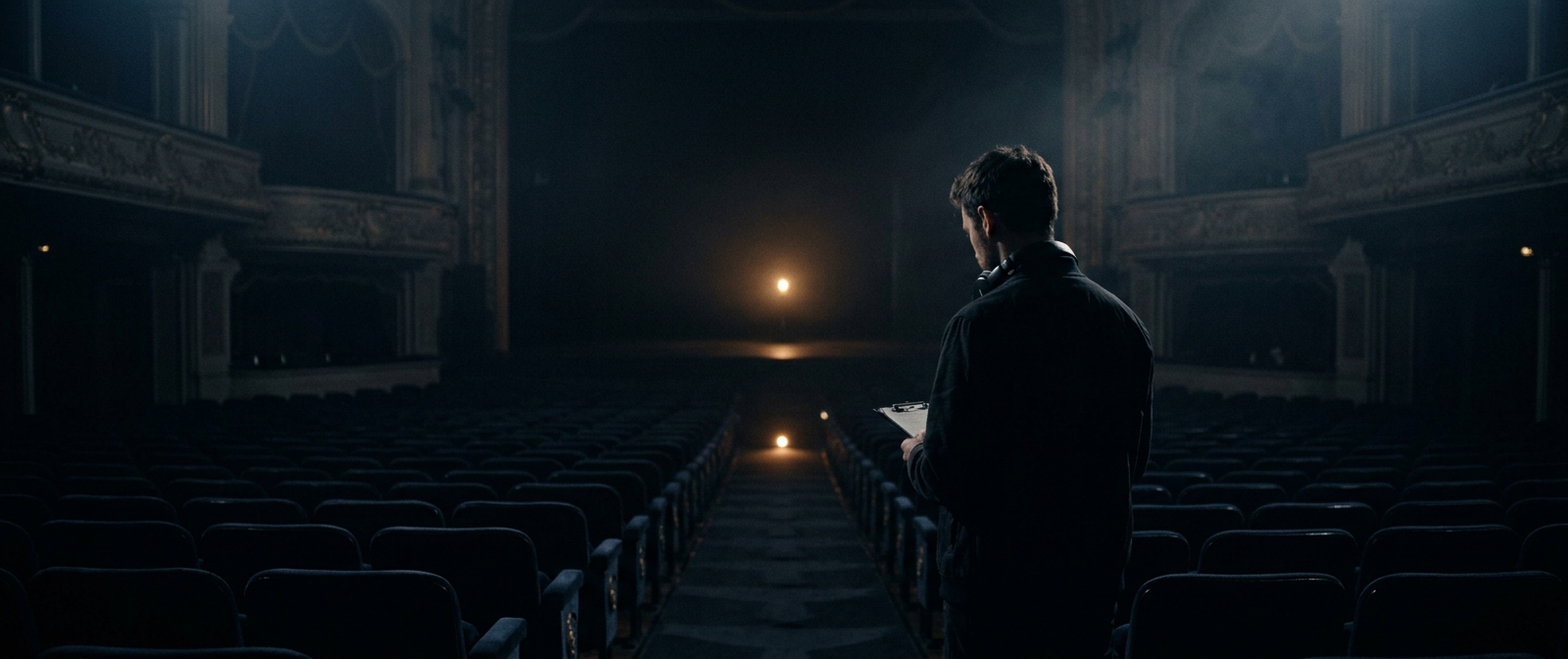
A sound designer stands alone in the center aisle of a darkened, empty theater before a show.
The lead offer · $25–75K

The Invisible Designer

An eight-to-twelve minute documentary portrait of a working theater sound designer. One production, rehearsal to opening night. No narrator. The person who decides what 1,800 people never notice.

Logline

Runtime 8–12 min · single subject · single production · no voiceover · homepage-grade.

A theater, house lights down, hours before an audience. One person walks the empty aisles with a tablet, listening.

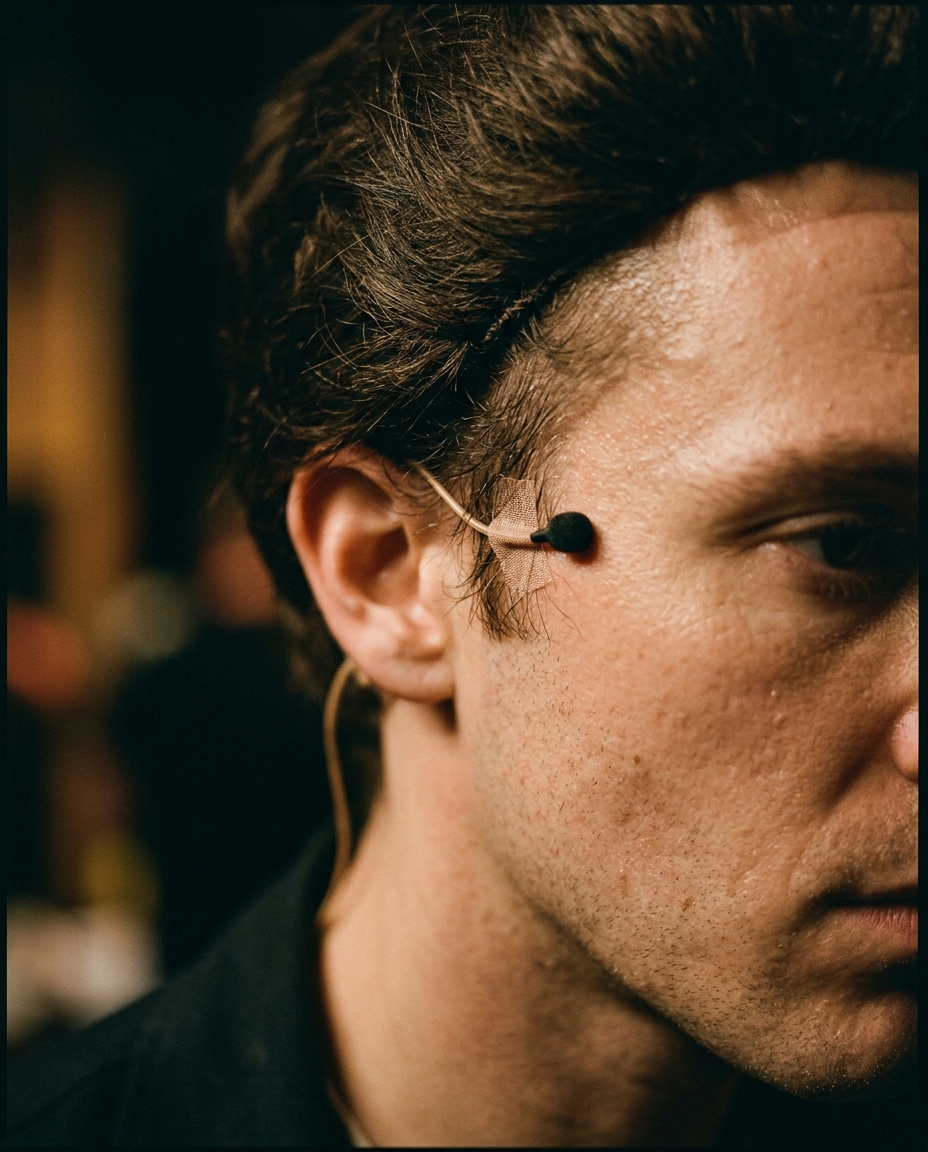
On stage, a performer's body mic, a DPA 4061, three millimetres, taped at the hairline, is the only thing between a whispered line and the back row hearing it as if there were no technology in the room. The designer's entire craft is making you forget the equipment exists. We hold on their face while they listen. That's the film.

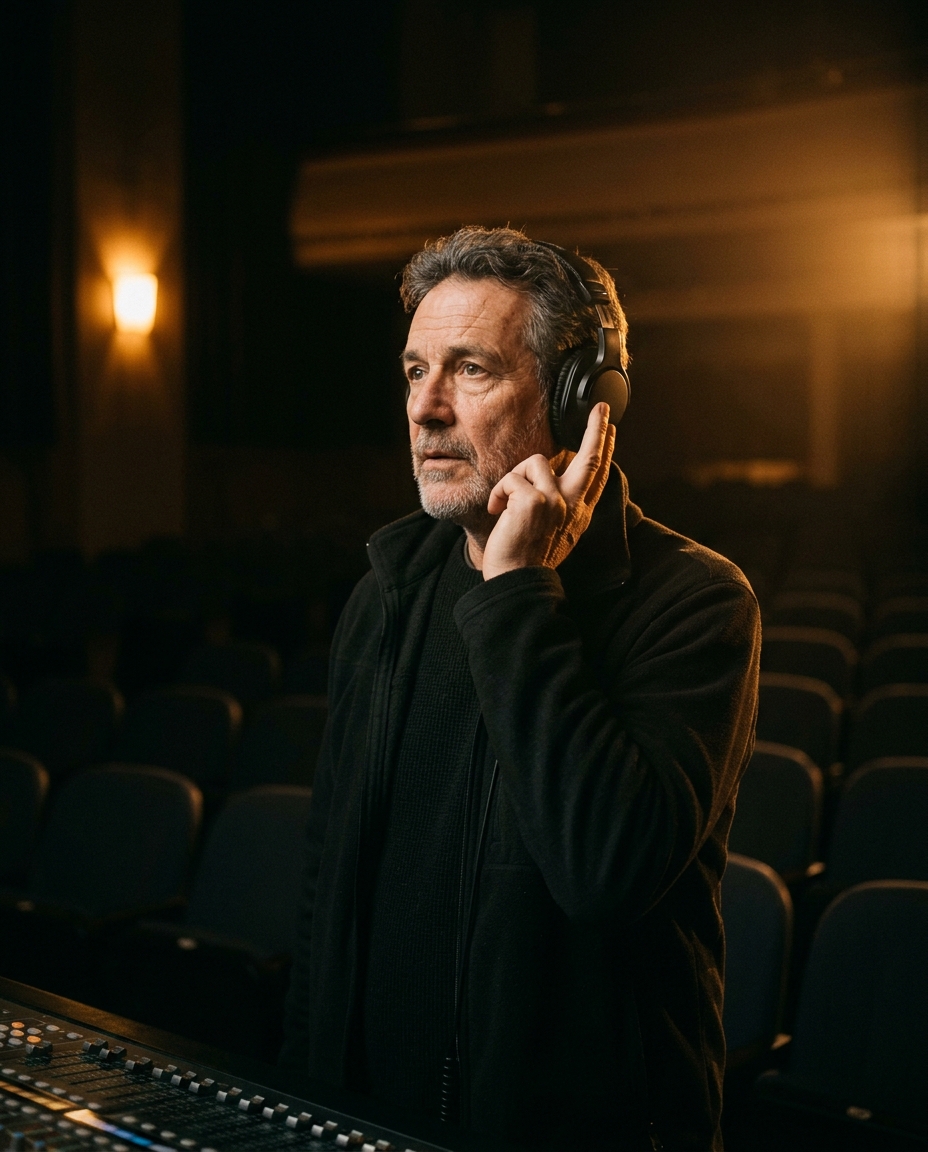
A close portrait of a sound designer listening intently in a darkened theater, half-lit. The held shot · listening
The subject

A working sound designer. Gareth Owen, or a West End peer.

Someone mid-career, deep in a run, who has spent decades making technology disappear. We don't need a celebrity. We need a craftsperson at the height of an unglamorous art, and a production generous enough to let a camera in.

Casting is a conversation. The named designer is illustrative; the film works with any peer who fits the room.

The shape

One production. Three movements. No narrator.

We follow a single show from load-in to opening. The structure is the production calendar, not a script.

Movement 01

The empty house

Before anyone arrives. The designer walks the room, the ghost light on a bare stage, the listening that no one watches. We establish the silence they're paid to own.

Movement 02

The placement

The mics go on. The 4061 at the hairline, the tape, the wig line, the test. The craft made tactile. Macro on the object, wide on the work.

Movement 03

Opening night

The house fills. The designer at the desk in the dark, listening to the thing they made invisible. We hold on the face. The audience never knows they were there. That's the point.

A 3mm lavalier microphone taped at a performer's hairline, nearly invisible.
The 4061 · the recurring close-up

The mic is a character. We shoot it like one.

Extreme macro, soft theatrical key, skin and hair in focus, the capsule almost gone. The smallest argument DPA makes, given the screen time it has earned.

Deliverables

What lands, and where it lives.

Built to drop into the homepage, the next Journeys release, the trade-show loop, and the Audiotonix keynote without re-editing.

  • The 8–12 minute film, color-graded, sound-designed, delivered in master and web encodes
  • A 60–90 second cutdown for social and the homepage hero
  • A stills package shot alongside, for press and the keynote deck
  • Vertical cuts for the channels Journeys already runs on
  • Full usage rights, no per-placement licensing
Why now

The safe play during the regulatory hold. Fundable at brand-marketing level without group sign-off.

The acquisition is the reason to move, not to wait.

The Audiotonix deal closes in H1. DPA walks into a larger family and needs to arrive as the premium, design-led, Danish-craft brand. A finished film makes that case in a keynote or on a homepage in a way a spec sheet can't. The documentary is the entry move, sized to brand-marketing budget, ready to fire on close.

Note: built ready to fire when the Audiotonix acquisition closes.

One designer. One show. One held shot.